 FURNKUBE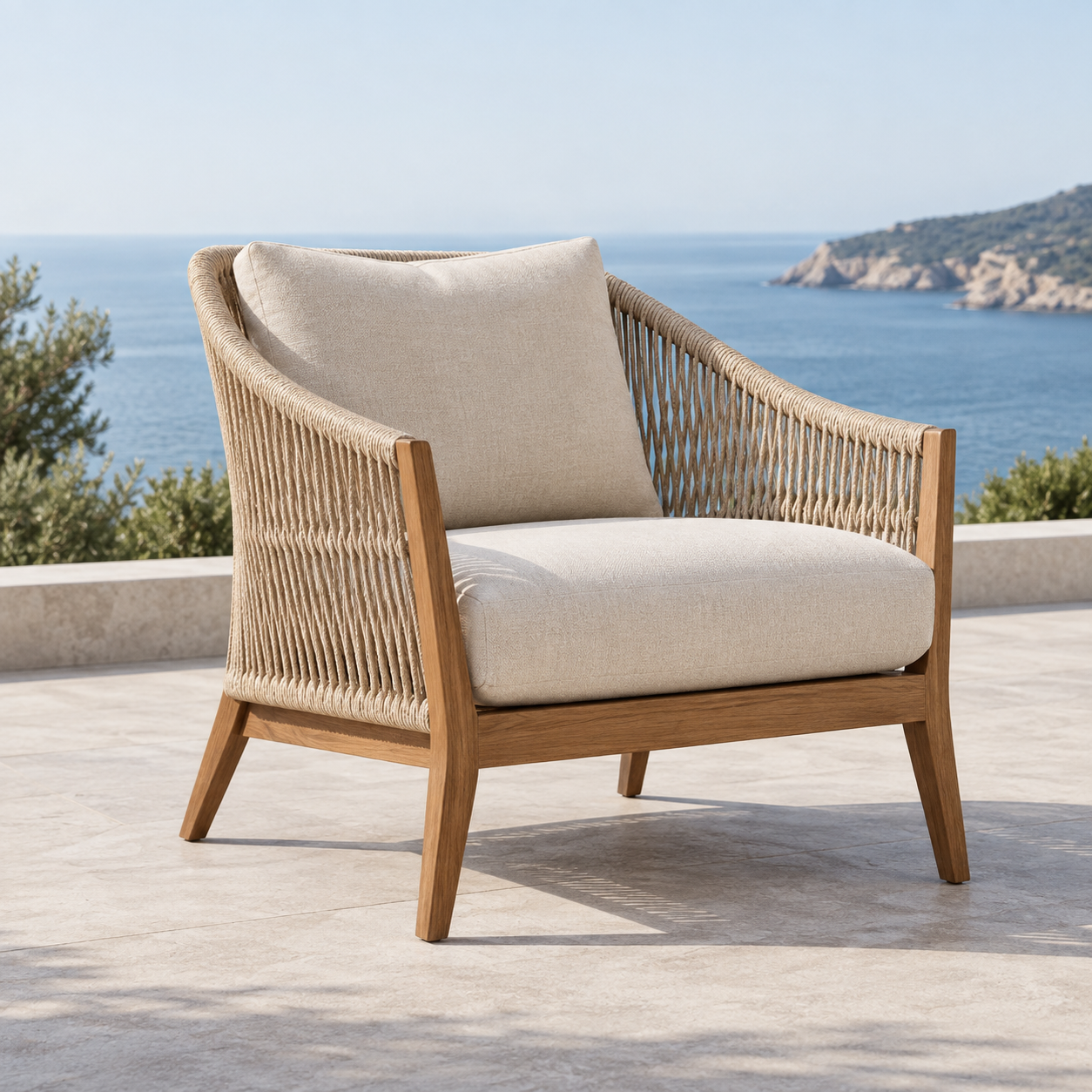
Aluminum, teak and rope are not interchangeable “outdoor materials.” In a commercial furniture specification, each plays a different role in structure, comfort, maintenance and visual character. The strongest selection begins with exposure and operation, then evaluates how the materials perform together in the finished product.
The short answer: choose by role, not trend
Aluminum is commonly chosen for a light, structured and low-maintenance frame; teak adds natural warmth and a changing surface; rope adds tactile comfort when its construction is matched to the application.
A project does not need to select one material for every product. Commercial collections often use aluminum frames for dining and sun loungers, teak for feature tables or arms, and rope for lounge seating. The decision should be based on the role each part plays, the local climate and what a property team can reasonably maintain.
The most useful comparison is therefore not “which material lasts longest?” It is “what is the structural material, what is the exposed finish, what touches the guest, and what does the operating team need to clean or service?” This separates performance questions from style language and helps buyers avoid generic claims.
When aluminum is the practical choice
Powder-coated aluminum is often specified where a project needs clean forms, manageable weight and a finish system that can be reviewed consistently during production.
Aluminum is widely used for outdoor chair, lounge and table frames because it can create precise profiles without the weight associated with many steel structures. For commercial buyers, the key detail is not simply whether the frame is aluminum. Ask about construction, weld finishing, surface preparation, coating coverage, drainage paths and the hardware that connects moving or assembled parts.
A powder-coated finish should be reviewed on the sample and again during factory testing. Look at edges, welded areas, underside coverage, holes and points where parts contact each other. These are the places where finish consistency and protection matter most. A good visual finish is important, but a commercial order also needs repeatable workmanship from one batch to the next.
Aluminum is particularly useful where staff move furniture frequently, such as dining terraces, pool decks and event spaces. It can also support a broad color language across a collection. Its limitations are usually about the total product design: a very light chair may need a different wind or stacking strategy, and hot-sun comfort may depend on slings, cushions or shaded use.
- Review the sample for frame feel, weld finish and coating consistency
- Check glides, stacking contact points and drainage around frames
- Use realistic handling tests: moving, stacking, opening and cleaning
- Confirm matching parts and spare hardware for repeat programs
When teak supports the design story
Teak is chosen for its natural appearance and outdoor suitability, but it should be specified with realistic expectations for color variation, weathering and care.
Teak is often used when a project wants a warmer, more residential or resort-oriented visual language. It can appear as a complete chair or table, a tabletop, an arm cap or a detail paired with metal. Because it is a natural material, buyers should discuss what they expect to see: grain variation, color range, joinery detail and the surface condition after exposure.
The maintenance question should be addressed before the purchase order, not after opening. Some clients accept natural silvering and regular cleaning; others expect the original tone to be preserved through a defined care routine. Neither preference is wrong, but the approach must fit the property’s staff, climate and operating budget.
For factory inspection, look at the timber grade, machining, sanded surfaces, joints and how timber interfaces with metal or rope. The sample should show the intended finish. If a dining table will be used for food service, discuss the surface behavior, cleaning method and protection during shipment rather than assuming that any outdoor timber top is suitable for all operations.
Where rope adds comfort and complexity
Outdoor rope is normally a comfort and visual component over a structural frame, so its fibre, tension and termination details deserve close inspection.
Rope seating can make a commercial lounge collection feel lighter and more tactile than a fully upholstered form. It is also a material where broad descriptions are not enough. Ask what the rope is made from, how it is attached, how tension is established, what sits beneath the weave and where it may rub against a frame.
During sample review, sit in the piece, view it from multiple angles and inspect the beginnings and ends of the weave. The question is not whether every line is perfectly identical; hand weaving has a human character. The question is whether the tension, pattern, terminations and contact points meet the approved standard and will remain serviceable in normal use.
Rope is often appropriate for covered or semi-covered lounge environments, cabanas, balconies and hospitality terraces. In harsh exposure, the entire product system—including the frame, cushions and cleaning plan—should be assessed. Factory testing can include a practical review of tension, sharp-edge protection and cushion support before the production method is approved.
Match the material to the climate and maintenance plan
Climate is not a single condition; sun, salt, humidity, rainfall, wind and cleaning practice create different risks for different materials.
A coastal property may prioritize corrosion management, furniture stability and a cleaning routine that removes salt deposits. A tropical site may focus on rainfall, drainage and ventilation around cushions. A city rooftop may need to consider wind, lift access and how quickly staff can close umbrellas or move lightweight seating. The same product can be suitable in more than one climate if its specification and use are adjusted accordingly.
Create a maintenance note as part of the product application. It should state how surfaces are cleaned, how cushions dry or store, how covers are used, and who checks moving parts. This does not need to be a complex manual. A practical, property-specific routine prevents the assumption that “outdoor” means maintenance-free.
For larger programs, send the climate and operation notes with the request for quotation. They provide valuable context when the factory proposes a material combination or flags a limitation.
Specify mixed-material collections with one approval standard
Mixed collections work when the buyer records the visual and functional relationship between materials in the sample and product schedule.
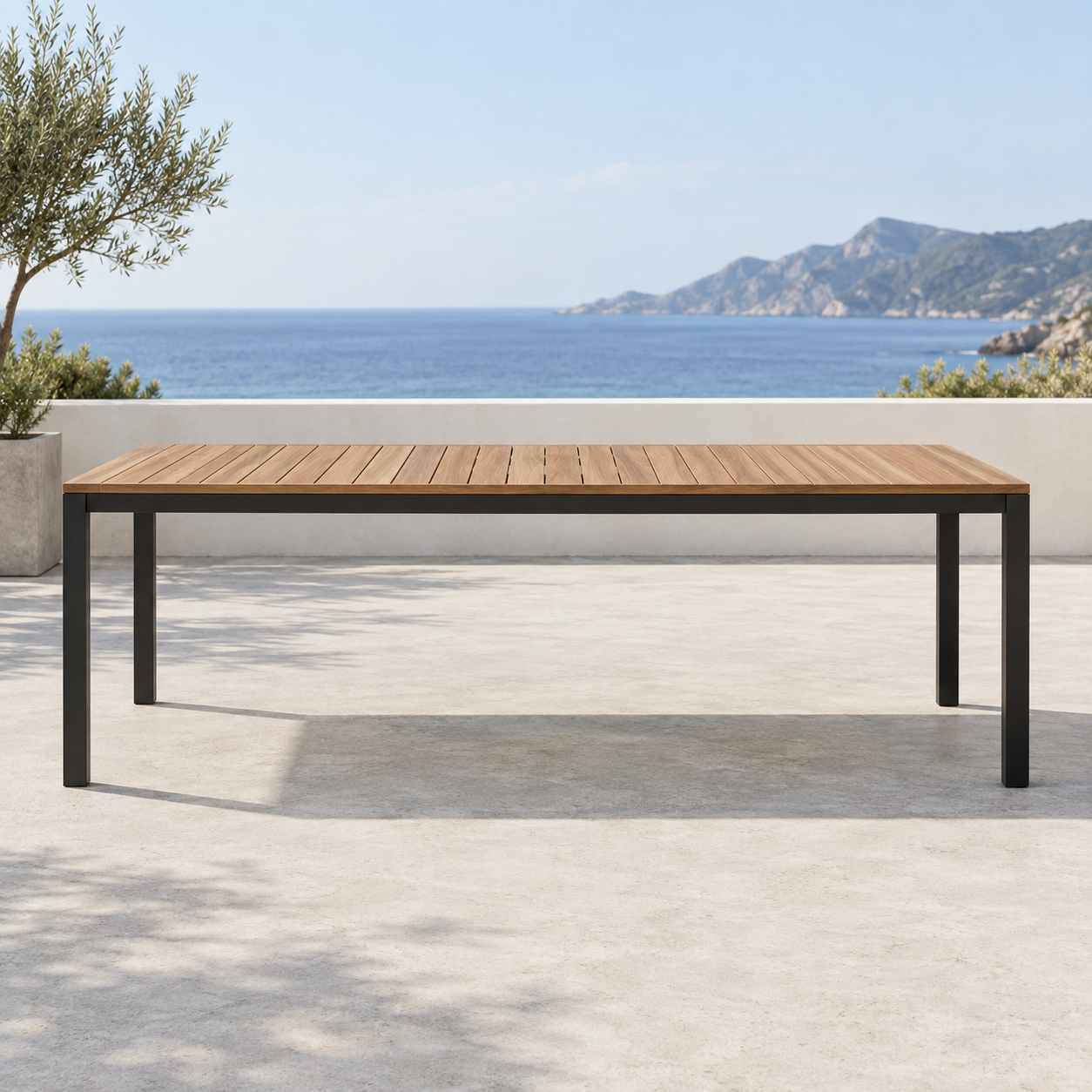
A mixed collection can create depth without becoming difficult to control. For example, an aluminum dining base, teak tabletop and rope dining chair may share a restrained palette while each material does a different job. The product schedule should identify the finish name, timber appearance range, rope color and cushion fabric so that the production team can match the approved reference.
Use physical samples for decisions that cameras reproduce poorly: coating texture, timber tone, rope handfeel and fabric color. Keep the signed reference available through shipment inspection. When the goods are complete, the inspector can compare the visible standard, assembly and packing against an agreed record rather than personal expectation.
If your project requires several materials, request a coordinated outdoor furniture product range instead of buying isolated items. A system approach helps with visual continuity, spare-part planning and installation preparation.
Make the decision with a sample and inspection plan
A credible material choice ends with a testable sample, clear customer requirements and checks that follow the product through production.
Before production, confirm the material schedule, drawing or dimensions, approved sample, finish references, cushion construction, packing approach and delivery timing. During production, the factory can use these records for in-process review. Before loading, shipment inspection can confirm visible finishes, quantities, assembly, accessories and cartons.
This process also protects the design intention. A supplier may have an alternative material that improves lead time or cost, but the buyer can evaluate it against the original performance requirement rather than accepting a vague substitution. That is the difference between a material conversation and a commercial specification.
Avoid common material-comparison errors
Material comparisons become misleading when they compare labels instead of construction, exposure and the service conditions around the product.
The first common error is treating every aluminium, teak or rope product as equivalent. A material name does not reveal how a frame is assembled, how a coating is applied, how a timber joint is protected or how a rope is terminated. Buyers should ask what is actually being supplied and how it will be checked against the approved sample.
The second error is judging only the first season. An outdoor collection is handled, cleaned, moved, covered and exposed over time. A well-chosen material may still disappoint if cushions are stored wet, covers trap moisture, glides wear through or a site lacks a realistic cleaning routine. Include the operator who will live with the furniture in the specification conversation whenever possible.
The third error is forcing one material into every zone to simplify sourcing. A limited palette can be coherent without using the identical construction everywhere. A property might use an aluminium chair for restaurant turnover, teak as a feature surface in a quieter lounge and rope for guest comfort under a covered canopy. The right mix reduces compromise rather than creating it.
Finally, avoid accepting a broad promise such as “marine grade” or “weatherproof” without asking what it means for the specific product. Request the material, construction and maintenance information that supports the claim, then use sample review and factory testing to make the result visible.
- Compare construction details, not only material names
- Write the climate and cleaning routine into the product brief
- Use each material where its function supports the zone
- Ask for product-specific evidence instead of broad durability language
Frequently asked questions
Is rope outdoor furniture durable enough for hotels?
It can be, when the rope construction, frame, tension, exposure and maintenance plan fit the application. Review the physical sample and the points where the weave contacts the frame.
Does teak need maintenance outdoors?
Teak should have an agreed care expectation. Some projects accept natural weathering; others plan cleaning and finishing to maintain a particular appearance.
What should I compare in an aluminum outdoor chair?
Compare the full product: construction, weld finishing, coating, glides, stacking points, drainage, hardware and the intended handling pattern.
Specify the whole system
Aluminum, teak and rope each have a useful place in commercial outdoor furniture. Select them by structural role, climate, maintenance and guest use, then preserve the decision with an approved sample and an inspection plan.
COMPARING MATERIALS?Ask for product guidance →RELATED RESOURCES